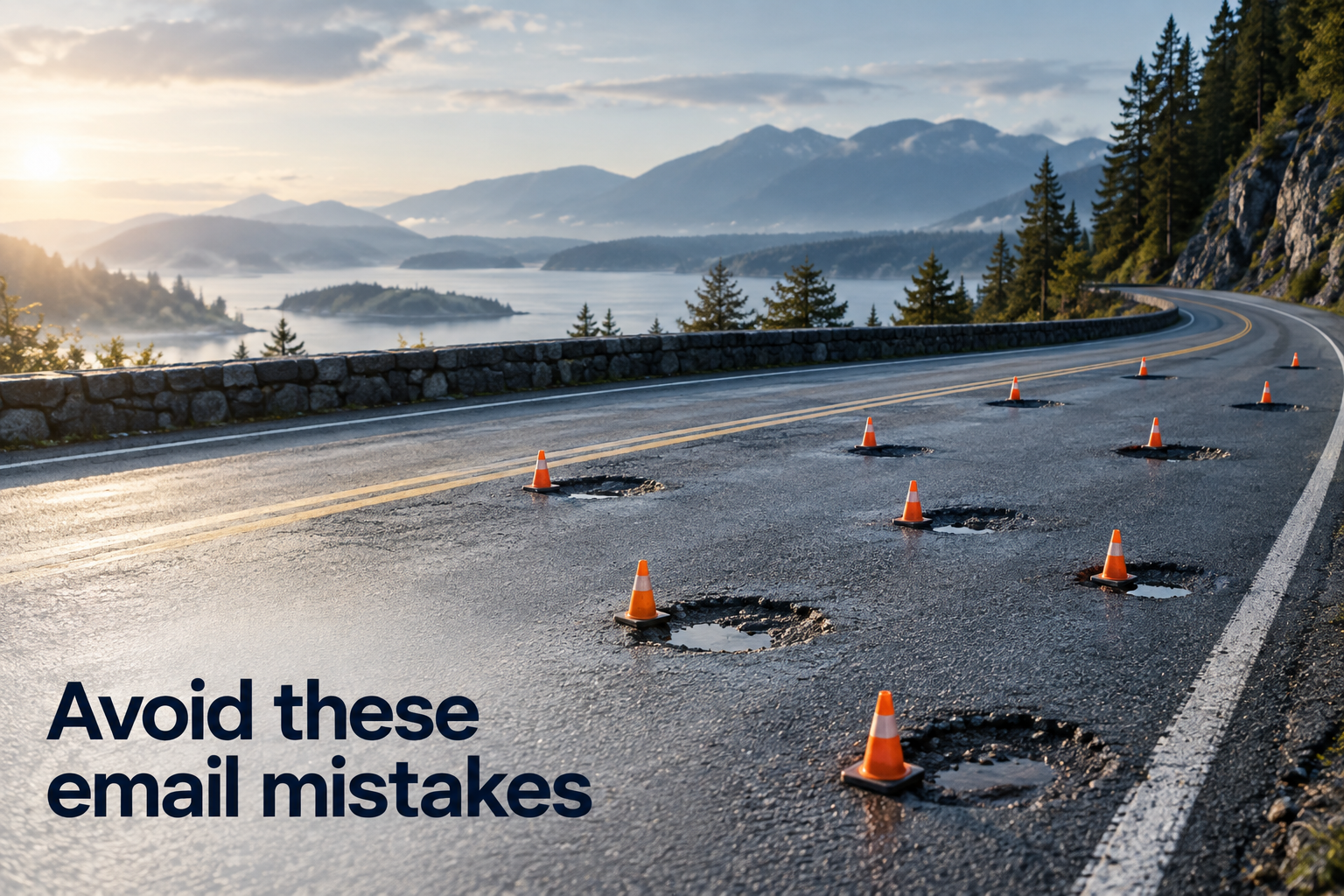
I've made nearly every mistake on this list. That's not false modesty — it's the honest history of how I learned email marketing: by doing it wrong, watching the numbers, and refining. Consider this article the tuition I already paid, so you don't have to.
Here are the ten mistakes that quietly break email marketing for beginners, and the fix for each.
Mistake 1: building a list of anyone instead of someone
Never buy lists, and don't chase raw subscriber counts. A small, engaged email list is far more powerful than a large, uninterested one — engaged subscribers open, click, and keep your deliverability healthy, while a bought list buries you in spam folders. Build with a real lead magnet and voluntary signups, every time.
Mistake 2: sending everyone the same email
Generic mass emails read as what they are. Use first names, reference what subscribers actually did or bought, and segment by interest. An email that feels personal is far more likely to be opened, read, and acted on.
Mistake 3: no clear call to action
Every email should have a purpose — one thing you want the reader to do, stated plainly: "Download the guide." "Book your spot." An email with no next step is a newsletter shrug; an email with five next steps is a decision the reader won't make.
Mistake 4: cramming everything in
One email, one main idea. Multiple offers, announcements, and link piles overwhelm readers into doing nothing. Short paragraphs, scannable structure, one message. Less is more.
Mistake 5: forgetting the phone
More than half of emails open on phones. Short paragraphs, readable fonts, buttons instead of tiny links — test on your own phone before every send, because a beautiful desktop email that's unreadable on mobile is unreadable, period.
Mistake 6: clickbait subject lines
Misleading subject lines buy one open and cost you the relationship. Your subject line sets expectations — deliver on what you promise. Honest specificity ("Save 20% today only") outperforms vague urgency over any timeline that matters.
Mistake 7: sending without testing
Send it to yourself first. Check the links, the typos, the formatting on laptop and phone. Two minutes of testing prevents the special shame of a broken-link apology email.
Mistake 8: hiding the unsubscribe link
Counterintuitive but true: easy unsubscribing protects you. Hidden opt-outs push frustrated readers to the spam button instead, which damages your sender reputation with everyone. A clean exit keeps your list honest — and it's also what the law requires.
Mistake 9: sending too much — or too little
Too many emails and subscribers tune out; too few and they forget who you are. One or two emails weekly is a reliable starting rhythm. Consistency beats intensity — pick a pace you can sustain on your worst week.
Mistake 10: never looking at the numbers
Open rates, clicks, conversions — the data tells you exactly what your audience wants more and less of. Ignoring analytics means repeating what doesn't work with more effort. A monthly fifteen-minute review is enough to steer by.
The pattern underneath the mistakes
Notice what all ten have in common: they treat subscribers as a mass instead of as people who trusted you with an inbox. The fixes are all one fix — respect the reader — applied ten ways: earn the signup, personalize, be clear, be brief, be readable, be honest, be careful, be easy to leave, be consistent, and pay attention.
Do that, and email becomes what it should be: the most reliable relationship channel your business owns. The next skill up is nurturing those relationships on autopilot.
Frequently asked questions
What is the most common email marketing mistake?
Chasing list size over list quality. A small, engaged list of voluntary subscribers outperforms a large, cold one on every metric that matters — opens, clicks, conversions, and deliverability.
How often should a beginner send marketing emails?
One to two per week is a reliable starting rhythm. The real rule is consistency: pick a pace you can maintain permanently rather than bursts followed by silence.
Why should unsubscribing be easy?
Because a frustrated subscriber who can't find the exit clicks "spam" instead — and spam complaints damage your deliverability with everyone. Easy opt-out keeps the list clean and your sender reputation intact.
Want the fixes in one place? The Email Marketing Quick-Start Playbook packs this checklist into a working reference. And if your email, website, and follow-up still run as disconnected pieces, the system that connects them will help more: explore operating infrastructure.