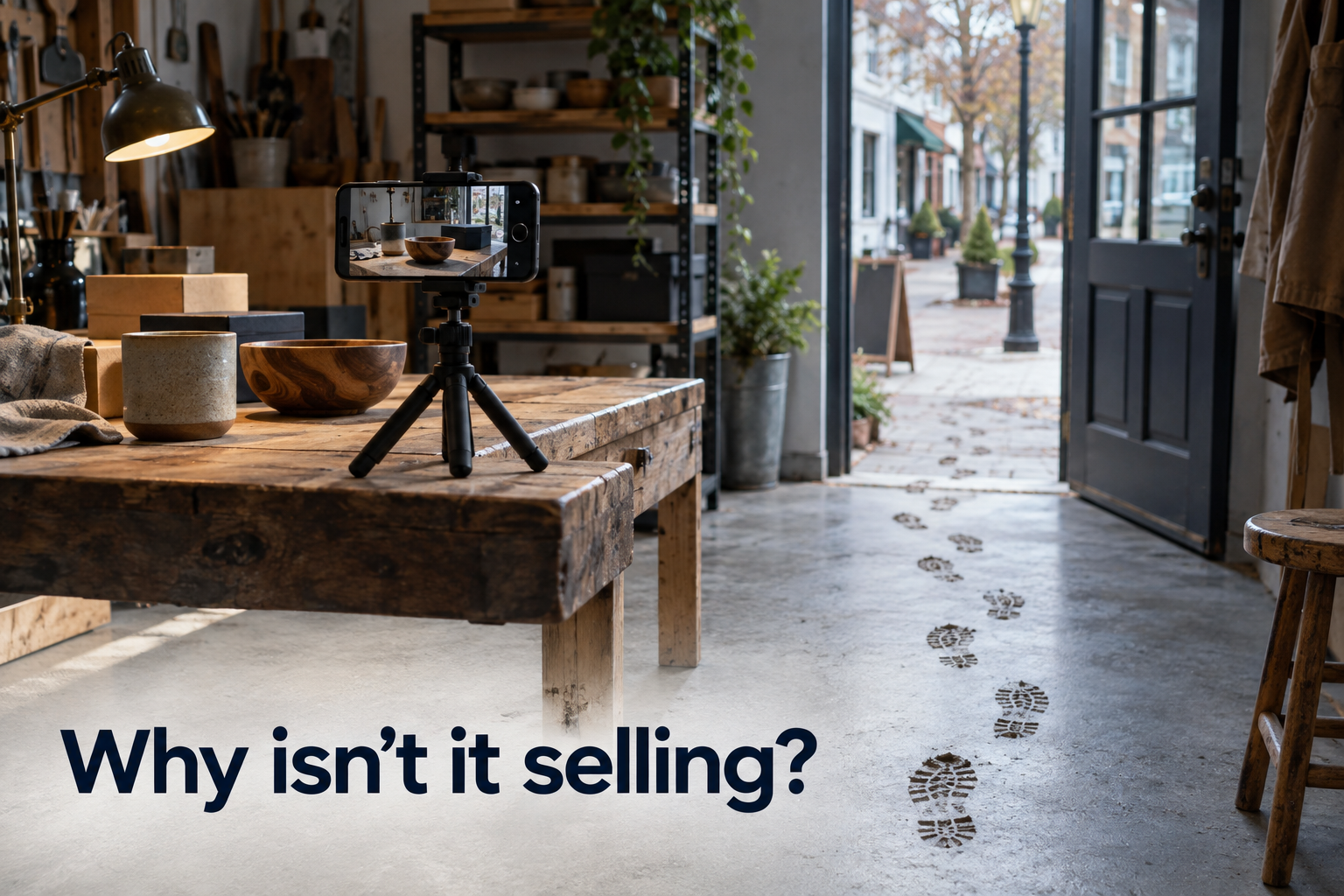
When I first started selling online, I didn't have a budget for ads or a detailed marketing plan. What I had was a cellphone, a passion for making handmade soap, and a willingness to share the journey — the good, the bad, and the ugly.
So I went live on social media: the behind-the-scenes of soap-making, answering questions in real time. What I didn't realize was that those live streams were doing more than building community. People watching wanted to know about the process, the ingredients — and, most importantly, how to buy the very soap being made in front of them. A simple way to connect became the engine that fueled my store's sales and my course enrollments.
That experience taught me what most struggling store owners eventually learn: the store is rarely the problem. The visibility is. Here are the strategies that turned mine from overlooked to thriving.
Understand your audience — precisely, not generally
Effective marketing begins with knowing exactly who your customers are. When I started, I generalized too broadly, and my messaging landed nowhere. The turning point came when I zeroed in on my actual audience — eco-conscious self-care enthusiasts — and suddenly the same products, described for the right people, converted.
Before touching any channel, get specific about who you serve. Every strategy below works better narrowed.
Show the work on social media
Social media isn't for likes — it's for letting people watch you be good at what you do. Live streams of the process, behind-the-scenes glimpses, customer stories, educational posts: content that shows the work builds a community around the business, and communities buy.
You don't need polish. My streams were a phone and a workbench. Consistency and realness beat production value.
Build the email list early
I underestimated email at first — and building a list transformed my sales. Social introduces you to people; email is where the relationship deepens, because you own the list and the algorithm can't take it away. Automated welcome sequences, genuinely useful newsletters, subscriber-only offers — the list-building playbook is its own guide.
Earn search visibility (SEO)
Without search visibility, your store is a hidden treasure with no map to it. Research the words your customers actually type, work them naturally into product pages and articles, and keep your site structure clean. When I implemented this, organic traffic — the kind that arrives already looking for what you sell — rose noticeably. It compounds: work done once keeps sending visitors.
Borrow aligned audiences
Collaborating with influencers and affiliates whose values matched mine introduced my store to new, relevant audiences I couldn't have reached alone. Look for micro-influencers and content creators in your niche with real engagement — alignment matters far more than follower count.
Let customers do the proving
Trust is the currency of small business, and nothing builds it like other customers. Encourage reviews. Invite customers to share photos and experiences. User-generated content reassures new visitors in a way your own copy never can — and it pairs directly with descriptions that sell on the product pages themselves.
Marketing is a system, not an event
None of these strategies is a one-time action. They form a loop — attention on social, relationship in email, discoverability in search, credibility from customers — and the loop needs tending. Pick the two channels that fit how you naturally work, run them consistently, and add the rest as capacity grows. A well-built store with a working visibility loop beats a beautiful store nobody finds, every time.
Frequently asked questions
Why is my online store getting traffic but no sales?
Usually a targeting or trust gap: the visitors aren't the right audience, or the product pages don't convince. Sharpen who you're speaking to, strengthen descriptions and reviews, and check the mobile checkout for friction.
What's the cheapest way to market an online store?
Showing your work: live streams and behind-the-scenes content cost a phone and consistency, and they build the trust that ads can't buy. Pair that with an email list from day one.
Do small online stores really need SEO?
Yes — search traffic arrives already looking for what you sell, and the work compounds. Even basic keyword-aware product pages and a few genuinely useful articles change what a store gets found for.
If the store's built but the system around it isn't, that's a solvable problem — start by finding where you are: find your starting point.