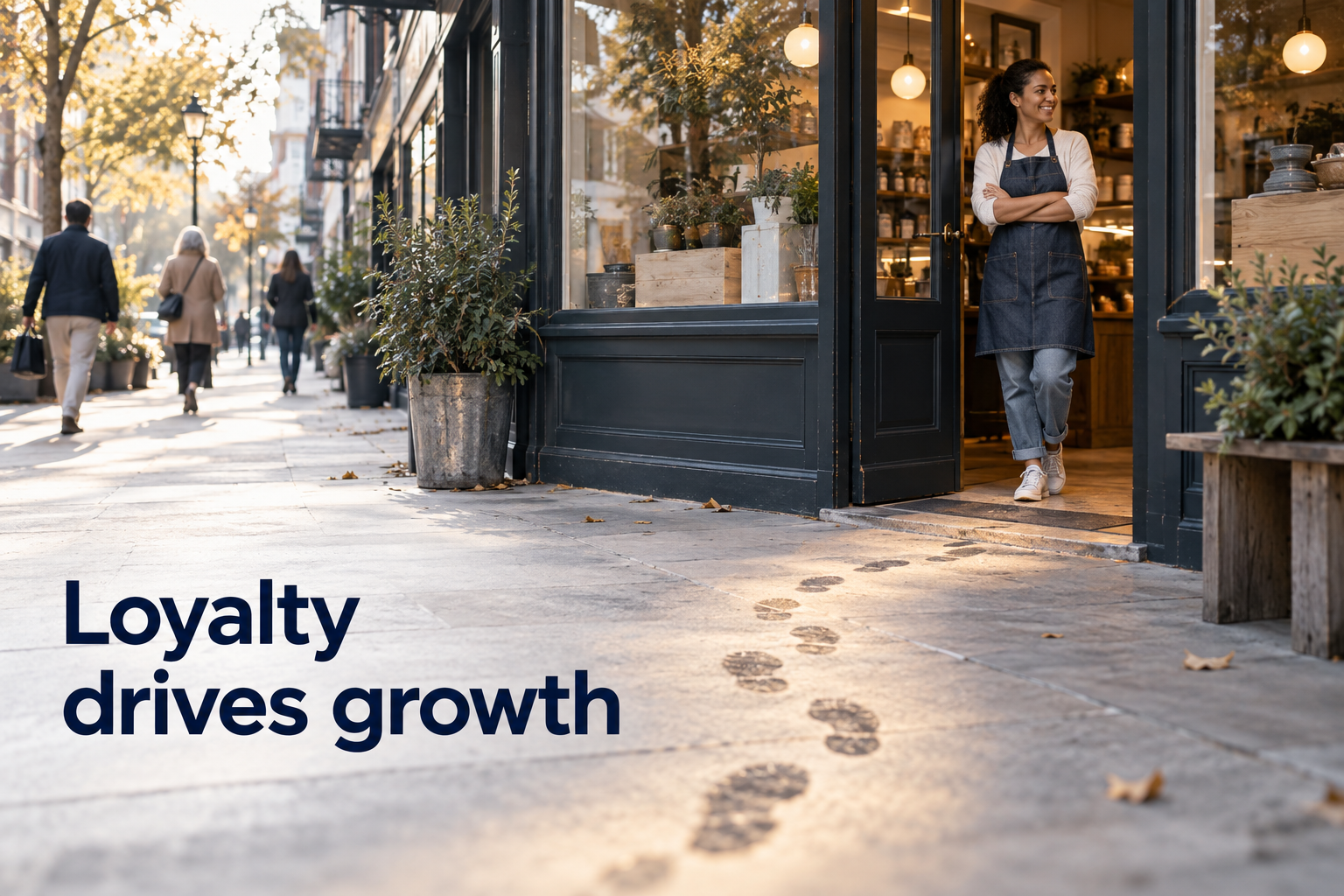
Here's the honest math of small business marketing: you will never out-spend the big brands on acquiring customers. But you can absolutely out-keep them — because retention runs on relationship, and relationship is the one asset where small businesses start ahead.
Keeping an existing customer costs far less than winning a new one. A digital loyalty program is how you turn that math into infrastructure: a system that rewards the customers you have for coming back, instead of spending everything chasing strangers.
What a loyalty program actually does for a small business
It keeps customers returning. Points, cashback, exclusive perks — rewards make customers feel valued and give them a concrete reason to choose you again. Digital tracking means they always know where they stand, which keeps the incentive alive between visits.
It raises customer lifetime value. Loyalty members shop more often and spend more per visit — a salon rewarding service points isn't discounting; it's structurally scheduling the next appointment.
It powers word of mouth. Satisfied members become advocates, and referral bonuses give advocacy a mechanism: reward the recommendation, and your best customers become your acquisition channel. (Referral programs deserve their own design.)
It differentiates you. In retail, food service, and e-commerce, a structured program — points, cashback, VIP perks — is a reason to pick you that survives price comparison.
It creates touchpoints beyond transactions. Birthday rewards, early access, point challenges — reasons to hear from you that aren't asks.
It produces data you've never had. Digital programs show you buying patterns and preferences in real time — the raw material for personalized offers, smarter inventory, and promotions aimed at actual behavior. This may quietly be the biggest benefit: most small businesses have loyal customers and no record of what loyalty looks like.
It can improve cash flow. Prepaid structures — the $50 card worth $60 — bring revenue forward and guarantee return visits, a small bank of committed future business.
What makes a program work
Five rules, learned the practical way:
- Keep it simple. If a customer can't grasp the benefit in one sentence, redesign it.
- Automate it. Tracking that depends on stamps and memory dies; digital tracking survives your busy season.
- Promote it everywhere. Signage, QR codes at checkout, email, social — a program nobody knows about retains nobody.
- Personalize the rewards. Incentives tied to what each customer actually buys outperform generic points.
- Watch and refine. Track engagement and redemption; the numbers tell you what your customers actually value.
The step-by-step setup guide walks the whole build.
The infrastructure view
Notice what a loyalty program really is: a system that captures the relationship your business already earns and makes it durable — visible, rewarded, and recorded, instead of dependent on memory and mood. That's retention infrastructure, and it compounds: every reward cycle deepens the habit, every data point sharpens the next offer.
The tools are no longer exclusive to big brands. What matters is designing the program around your customers and your operation — then letting it run.
Frequently asked questions
Do loyalty programs work for very small businesses?
Yes — arguably best, because small businesses already have the relationships loyalty programs formalize. Digital tools have removed the cost and complexity barriers.
What's the main benefit of a digital loyalty program over punch cards?
Data and automation: digital programs track behavior, personalize rewards, and run without manual effort — and customers can't lose the card.
What kind of loyalty program should a small business start with?
The simplest one your customers can grasp instantly — usually points per purchase with a clear reward. Refine from real redemption data after launch.
If keeping customers still depends entirely on memory and goodwill, that's a system worth building before the next busy season: explore operating infrastructure.