Points and discounts are the vocabulary of loyalty programs — useful, proven, and increasingly invisible. Every business offers them, so customers stop feeling them.
The rewards that actually deepen relationships do something the point ledger can't: they surprise, they include, they play, they personalize, or they mean something. Here are five approaches, each with a different mechanism — and all of them plays to the small business advantage, because they run on knowing your customers.
1. Surprise-and-delight gifts
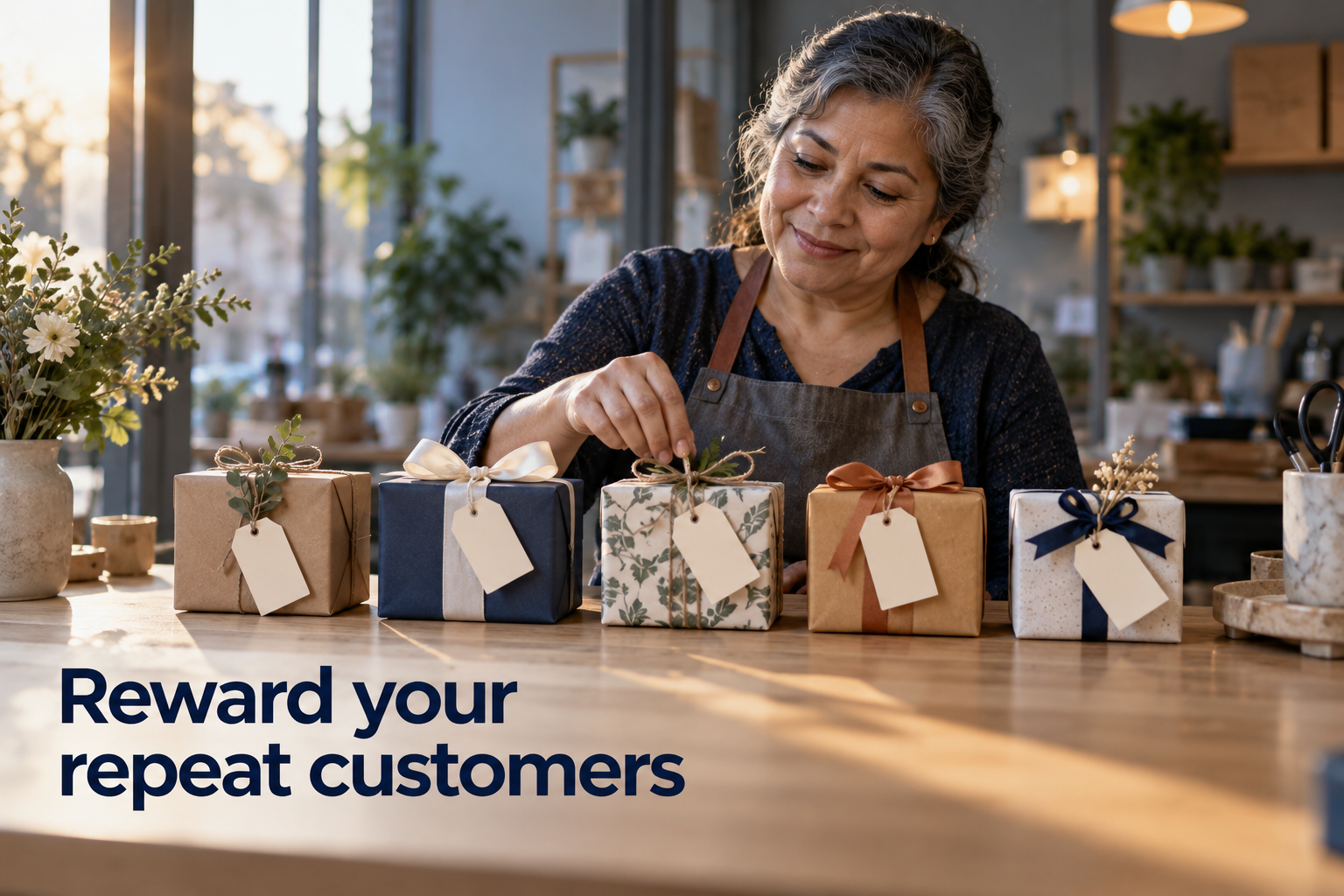
The unplanned reward outperforms the earned one emotionally, because it carries a message no points balance can: we noticed you. A coffee shop handing a frequent customer a complimentary seasonal drink — no redemption, no announcement — creates a story that customer tells.
Random freebies, early access to something new, a handwritten thank-you in the bag. Small costs, outsized memory.
2. VIP membership: selling belonging, not benefits
Loyalty transcends transactions — at its best, it's belonging. A VIP tier works less because of its perks and more because of its door: members-only events, early sale access, priority support, direct access to you.
The perks justify the tier. The belonging is what retains.
3. Gamified rewards
Progress is fun, and fun retains. Leaderboards, milestone badges, challenges — a bookstore running a reading challenge where customers earn points for reviews, referrals, and purchases isn't just incentivizing; it's giving customers a game they play with the business.
Gamification suits businesses whose customers engage often; the mechanics need enough activity to feel alive.
4. Personalized rewards
Generic discounts feel like marketing; tailored ones feel like recognition. A salon offering a free treatment after specific visit milestones, an offer built on what this customer actually buys — the reward lands because it's evidently about them.
This is where your customer data earns its keep, and it's the same principle as everywhere else in your business: the personal touch is the small business advantage, and rewards are one more place to express it.
5. Charitable giving on their behalf
Some customers are moved less by getting than by giving. Letting points convert into a donation — a bakery turning earned rewards into meals for local families — aligns the program with values, and ties your business to the community you share.
This one works when it's genuine: a real local cause, real contributions, honestly reported.
Choosing your mix
You don't need all five. Pick by what your customers value and what your operation can sustain: surprise programs need attentiveness, VIP tiers need genuinely exclusive perks, gamification needs frequency, personalization needs data, and charitable giving needs authenticity.
Layer one or two onto a solid basic structure, and the program stops being a ledger and starts being a relationship — which is the whole point of retention infrastructure.
Frequently asked questions
What rewards work better than discounts for repeat customers?
Surprise gifts, VIP access, gamified challenges, personalized offers, and charitable giving — each deepens the relationship in a way generic discounts can't, because each communicates recognition rather than just price.
How do surprise rewards affect customer loyalty?
Strongly — unexpected rewards create memorable moments and stories customers share, precisely because nothing was owed. The message "we noticed you" retains better than any coupon.
Do charitable-giving rewards actually retain customers?
For values-driven customers, yes — donating rewards to a genuine local cause builds emotional connection with the business and the community. Authenticity is the requirement; performative giving backfires.
If your rewards, follow-up, and customer data still live in separate places, connecting them is what turns nice gestures into a retention system: explore operating infrastructure.